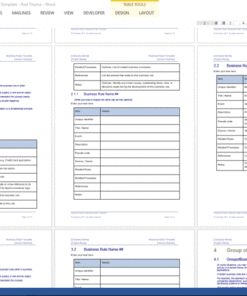
Establishing clear and consistent operational guidelines is a cornerstone of any successful organization, yet many struggle with documenting and managing them effectively. A powerful yet often overlooked tool for this task is a Business Rules Template Word document, which provides a structured format for capturing, defining, and communicating the specific directives that govern your business processes. By leveraging the familiarity and accessibility of Microsoft Word, companies can create a central source of truth that is easy for both technical and non-technical stakeholders to understand and use. This approach demystifies complex logic and ensures that everyone, from developers to front-line staff, is operating from the same playbook.
The alternative to using a template is often a chaotic mix of scattered documents, emails, and institutional knowledge locked away in the minds of a few key employees. This disorganization leads to inconsistencies, errors, and significant inefficiencies. When a new project starts or an employee leaves, the process of rediscovering and re-documenting these crucial rules can be painstakingly slow and expensive. A standardized template eliminates this guesswork, providing a consistent framework that accelerates documentation, simplifies onboarding, and reduces the risk of misinterpretation.
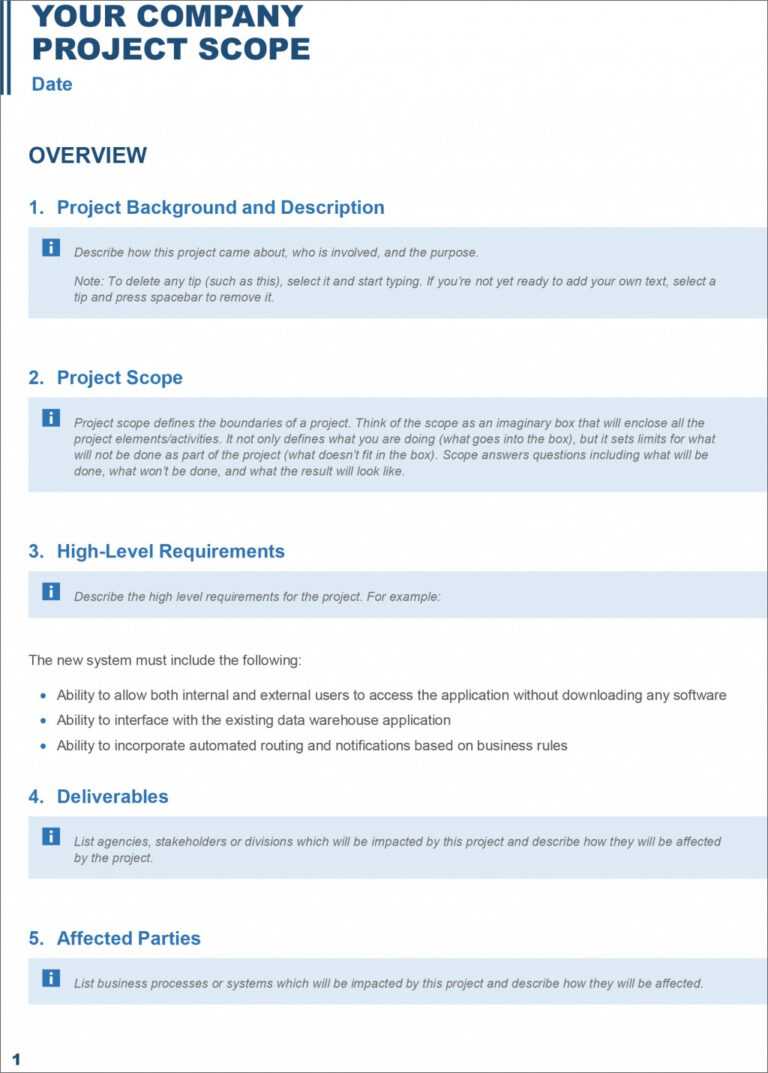
Implementing a structured approach to business rules is not just about avoiding problems; it's about unlocking strategic advantages. Well-defined rules are the foundation for process automation, improved regulatory compliance, and more agile decision-making. They empower teams to act confidently, knowing their actions align with established company policies and objectives. This guide will walk you through everything you need to know about creating and using a Word-based template for your business rules, from its essential components to best practices for management, helping you bring order and clarity to your operations.
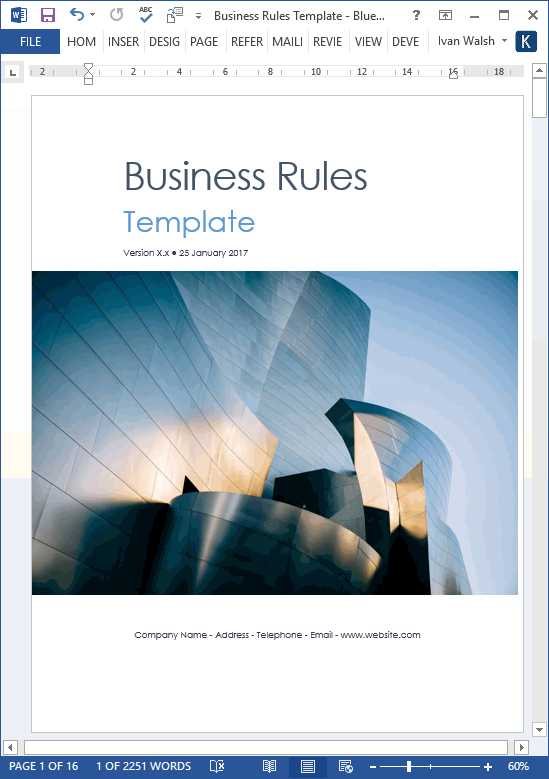
What Are Business Rules and Why Are They Crucial?
At its core, a business rule is a statement that defines or constrains some aspect of a business. It's a directive that dictates how operations should be conducted to achieve specific goals, comply with regulations, or adhere to company policies. These rules are not vague suggestions; they are explicit instructions that can be tested and enforced. They translate high-level business policies into actionable logic that can be applied consistently across the organization.

Think of them as the "if-then" statements that run your company. For example:
* Customer Service: IF a customer's order total is over $100, THEN they are eligible for free shipping.
* Finance: A travel expense claim MUST be submitted with original receipts for reimbursement.
* Human Resources: An employee MUST complete 90 days of service before being eligible for paid time off.
* Sales: A discount greater than 25% MUST receive approval from a regional sales manager.
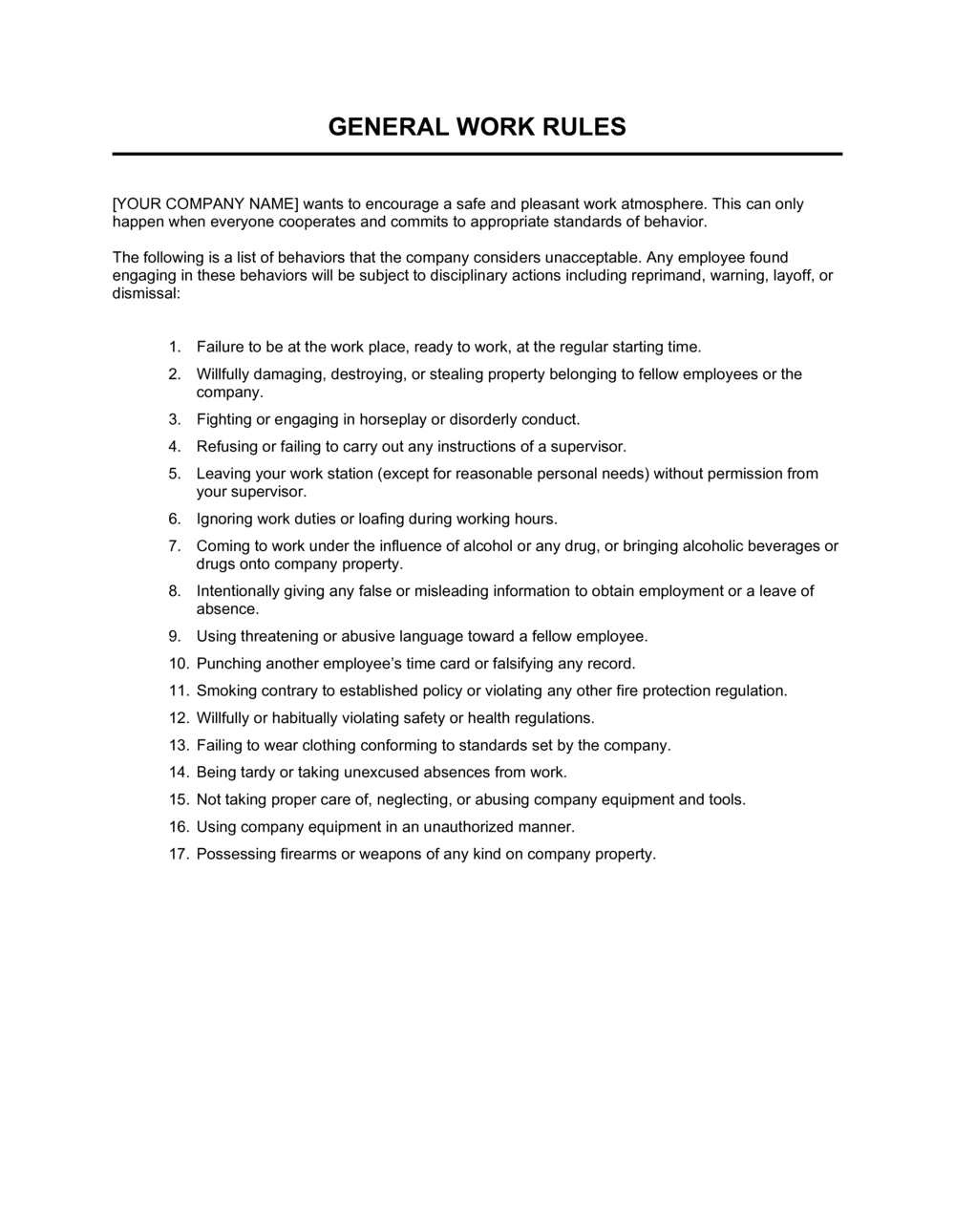
The importance of formally documenting these rules cannot be overstated. They are crucial for several reasons:
- Consistency: Documented rules ensure that the same decisions are made and the same processes are followed in similar situations, regardless of who is performing the task. This leads to predictable outcomes and a consistent customer experience.
- Compliance: Many industries are governed by strict legal and regulatory requirements. Business rules provide a clear, auditable trail demonstrating how the organization adheres to these standards.
- Efficiency and Automation: Clear rules are a prerequisite for automating processes. Once a rule is defined, it can be programmed into software systems to execute tasks automatically, reducing manual effort and the potential for human error.
- Agility: When market conditions change or new strategies are introduced, having a central repository of business rules makes it easier to identify which processes need to be updated. This allows the organization to adapt more quickly.
- Knowledge Transfer: Documenting rules prevents critical operational knowledge from being lost when experienced employees leave. It provides a reliable resource for training new hires and ensuring business continuity.
The Advantages of Using a Word-Based Template
While specialized business rule management systems (BRMS) exist, for many organizations, a well-structured template in Microsoft Word is a more practical and accessible starting point. Its universal presence and user-friendly interface offer significant advantages.

Accessibility and Familiarity
Nearly every professional is familiar with Microsoft Word. There is no steep learning curve or need to purchase and implement new, complex software. Stakeholders from any department—be it legal, marketing, or IT—can easily open, read, and contribute to the document without special training. This widespread accessibility fosters broader collaboration and adoption across the organization.
Customization and Flexibility
Word templates are incredibly flexible. You can easily tailor a template to fit your organization's specific needs. This includes adding your company logo and branding, customizing table columns to capture unique information, and structuring the document to align with your internal documentation standards. Unlike rigid software solutions, a Word template can be modified on the fly as your requirements evolve.
Collaboration and Version Control
Modern versions of Word, especially when integrated with platforms like SharePoint or OneDrive, offer robust collaboration features. Multiple users can comment, suggest edits using "Track Changes," and even co-author a document in real time. This creates a dynamic environment for refining rules. Furthermore, a clear version control system (e.g., v1.0, v1.1, v2.0) can be manually maintained within the document's header or title page, ensuring everyone is working from the latest approved version.

Simple Integration and Distribution
Word documents are a universal standard for business communication. They can be easily shared via email, uploaded to a shared drive, or converted into a PDF for wider, non-editable distribution. This makes it simple to communicate approved rules to all relevant personnel, print them for training manuals, or include them as appendices in project documentation.

Key Components of an Effective Business Rules Template Word
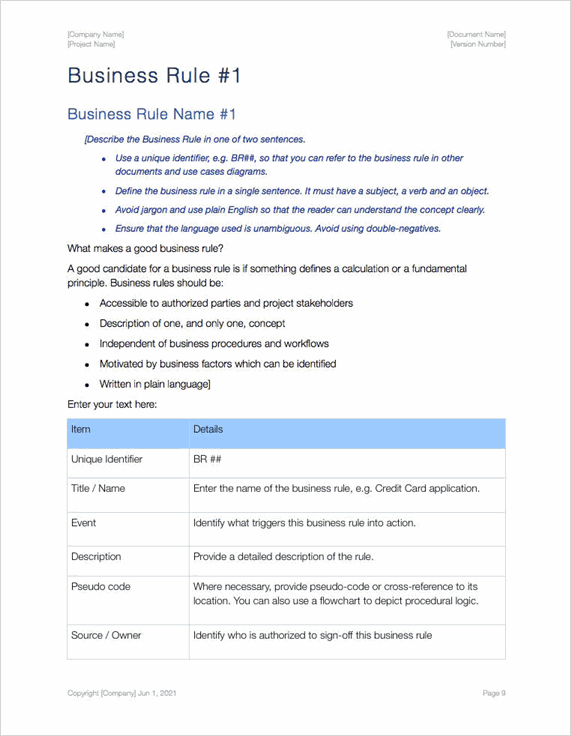
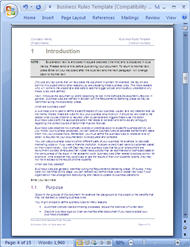
To be effective, your template needs to capture more than just the rule itself. A comprehensive structure provides context, justification, and metadata that make the rules understandable, traceable, and manageable over time. Here are the essential components to include in your Business Rules Template Word.
Rule Identification and Naming
Every rule needs a unique identifier to prevent confusion. This can be a simple sequential number combined with a departmental prefix (e.g., FIN-001, HR-023). Following the ID, a clear, descriptive name should summarize the rule's purpose (e.g., "Manager Approval for High-Value Discounts").
Rule Statement
This is the core of the document. The rule statement must be written in clear, precise, and unambiguous language. Avoid technical jargon whenever possible. A good practice is to use simple, structured English, often in an IF [condition], THEN [action] format or as a direct constraint ([Subject] MUST [action]).
- Poor Example: Discounts need to be watched.
- Good Example: IF a proposed discount on a single order exceeds 20%, THEN it MUST be approved by a sales manager before being offered to the customer.
Source and Justification
This section explains why the rule exists. The source could be a legal statute (e.g., "Sarbanes-Oxley Act, Section 302"), an internal company policy ("Employee Handbook, page 15"), or a decision made by a subject matter expert. The justification provides the business rationale, helping stakeholders understand its importance and preventing it from being arbitrarily changed or ignored.
Scope and Applicability
Not every rule applies to the entire organization. This section defines the boundaries of the rule. Specify which departments, roles, geographical regions, products, systems, or processes are affected by it. For instance, a rule might apply only to "online sales in the North American region" or to "all employees at the manager level and above."
Version History and Ownership
Rules evolve. The version history tracks changes over time, including who made the change, when it was made, and a brief description of what was altered. Assigning an "owner"—a specific person or role (e.g., "Director of Compliance")—is also critical. The owner is responsible for the rule's accuracy, relevance, and periodic review.

Status and Effective Dates
A rule may go through a lifecycle. Its status should be clearly marked as Active, Pending Review, Draft, or Retired. The effective date indicates when the rule comes into force, and an end date can specify when it is no longer applicable. This helps manage the implementation of new policies and the phasing out of old ones.
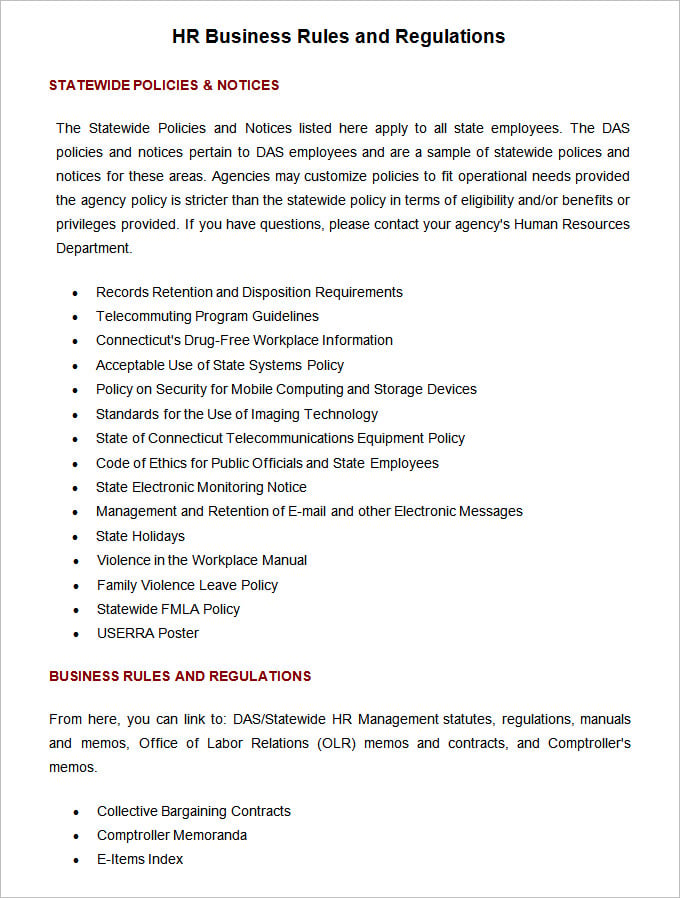
How to Create Your Own Business Rules Template in Word
Building your own template is a straightforward process that ensures the final product is perfectly tailored to your organization's needs. Follow these steps to create a reusable and professional template.
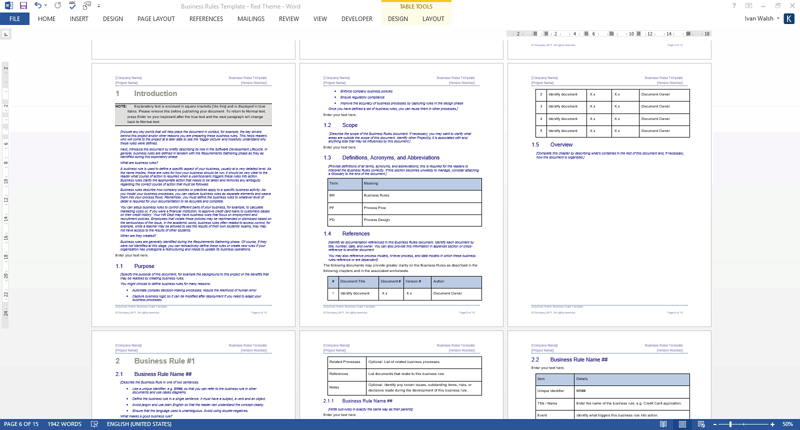
Open a New Document and Set Up the Structure: Start with a blank Word document. Begin by creating a title page. Include fields for the Document Title (e.g., "Sales Department Business Rules"), Version Number, Author/Owner, and Last Updated Date.
Design the Header and Footer: Go to the "Insert" tab and add a header and footer. In the header, you might include your company logo and the document title. In the footer, it's good practice to include the page number, document version, and status (e.g., "Draft" or "Confidential").
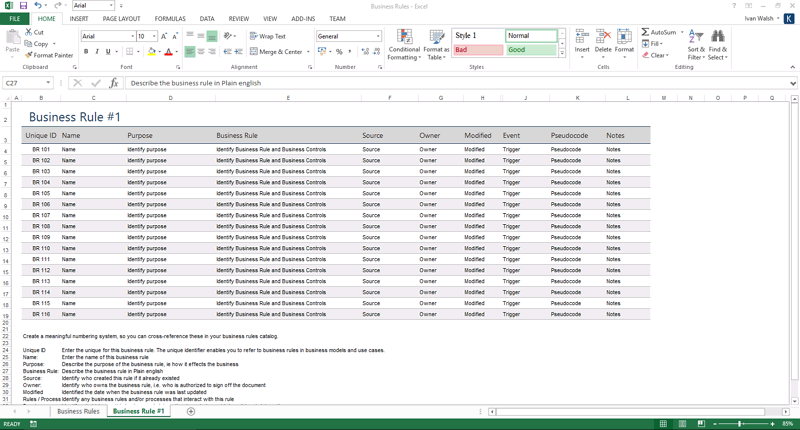
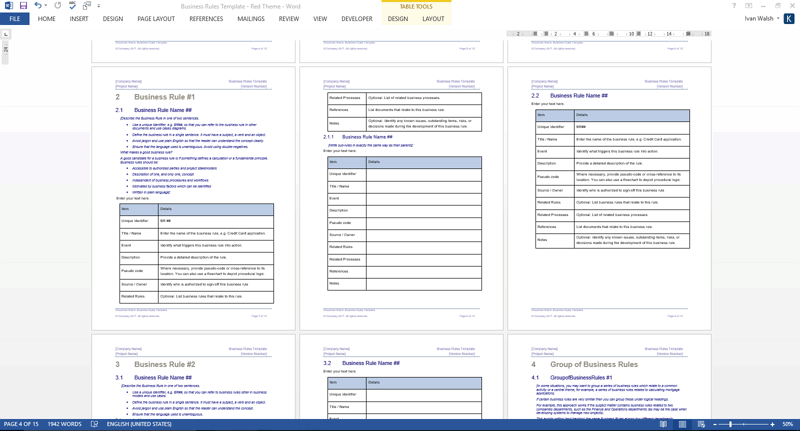
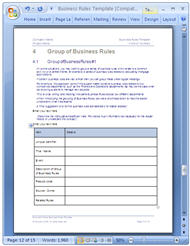
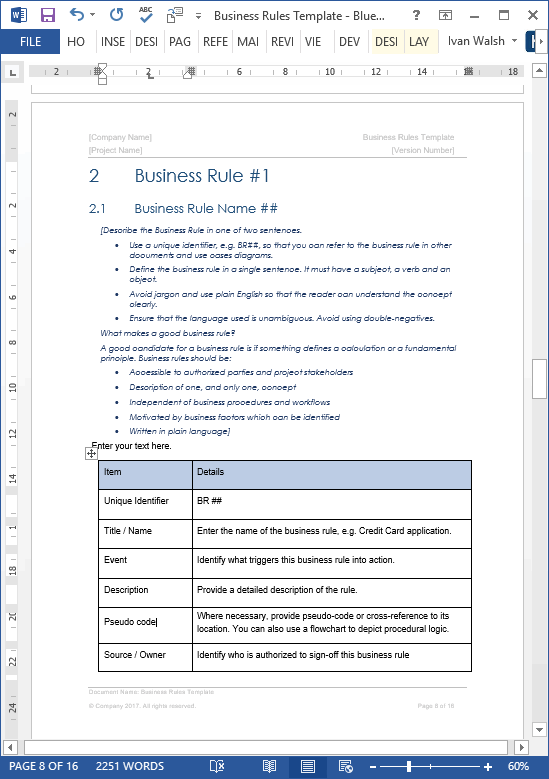
Create the Main Business Rules Table: The heart of your template will be a table. Go to "Insert" > "Table" and create columns for each of the key components discussed in the previous section:
- Rule ID
- Rule Name
- Rule Statement
- Source/Justification
- Scope/Applicability
- Owner
- Status
- Effective Date
- Version
Add Instructional Placeholders: In the first row of your table, or directly within the cells of a blank row, add placeholder text to guide users. For example, in the "Rule Statement" column, you could write:
[Write the rule in clear, unambiguous language. Use an IF/THEN format where possible.]This helps ensure consistency in how information is entered.Include a Change Log Section: After the main rules table, add a new section with the heading "Document Change Log." Create a simple table here with columns for Version, Date, Author, and Summary of Changes. This provides a high-level overview of the document's revision history.
Save as a Word Template (.dotx): This is a crucial final step. Instead of saving as a standard document (
.docx), go to "File" > "Save As" and change the "Save as type" dropdown to Word Template (.dotx). Saving it as a template means that when a user double-clicks the file, Word will open a new, untitled copy of the template, preventing them from accidentally overwriting the original master file.
Best Practices for Managing Your Business Rules Documents
Creating the template is only the first step. Effective management is key to ensuring your business rules remain a valuable asset rather than an outdated document.
Use Clear and Concise Language
The primary audience for business rules is often business users, not IT specialists. Write rules in plain English and avoid acronyms and technical jargon. The goal is clarity and universal understanding. A good test is to ask whether someone from a completely different department could understand the rule's intent.
Establish a Central Repository
Your business rules documents should not be saved on individual hard drives. Establish a single, central location where all rules are stored and accessed, such as a dedicated SharePoint site, a shared network drive, or a company intranet page. This ensures everyone is referencing the same "source of truth."
Implement a Review and Approval Process
Define a clear workflow for how rules are proposed, reviewed, approved, and published. This process should involve all relevant stakeholders, including business owners, subject matter experts, and representatives from legal or compliance if necessary. Documenting this workflow ensures that new rules are properly vetted before they become active.
Conduct Regular Audits
Business environments are dynamic. A rule that was relevant last year may be obsolete today. Schedule periodic reviews (e.g., annually or quarterly) of all active business rules to ensure they are still accurate, necessary, and aligned with current business objectives. The rule "owner" should be responsible for leading this review.
Finding and Customizing a Pre-Made Business Rules Template Word
If you prefer not to start from scratch, many pre-made templates are available that you can adapt for your needs. This can save time and provide a professionally formatted starting point.
Where to Look for Templates
Several sources offer downloadable Word templates:
* Microsoft Office Template Library: Microsoft provides a variety of free templates directly within Word ("File" > "New") or on its website. Search for terms like "policy," "procedure," or "guideline" templates.
* Business Analyst and Project Management Websites: Many professional websites and blogs dedicated to business analysis offer free resources, including business rules templates.
* General Template Websites: Sites that specialize in business document templates often have sections dedicated to operations, compliance, or process management.
What to Look for in a Quality Template
When evaluating a pre-made template, look for one that is comprehensive and well-structured. It should include most of the key components discussed earlier, such as fields for a unique ID, source, owner, and status. A clean, professional layout that is easy to read and navigate is also important.
How to Adapt a Pre-Made Template
Once you've downloaded a template, customize it to fit your organization:
* Add Your Branding: Insert your company logo and adjust the colors and fonts to match your corporate style guide.
* Modify Fields: Rename, add, or remove columns in the table to align with your specific terminology and information requirements. For example, you might want to add a field for "Related Systems."
* Simplify or Expand: Remove any sections that are not relevant to your business to keep the document lean. Conversely, add sections if you have unique requirements not covered by the standard template.
Conclusion
In a complex business environment, clarity and consistency are paramount. A well-designed Business Rules Template Word provides a simple yet incredibly effective framework for achieving both. By systematically documenting the directives that govern your operations, you create a central source of truth that reduces ambiguity, empowers employees, and supports strategic goals like automation and compliance.
Leveraging the universal accessibility and flexibility of Microsoft Word removes barriers to adoption, allowing stakeholders from across the organization to participate in defining and refining the rules that drive success. Whether you build your own template from scratch or customize a pre-made one, the investment in a structured documentation process will pay dividends through increased efficiency, improved decision-making, and greater organizational agility. Don't let your crucial business logic remain hidden in emails and spreadsheets; bring it to light with a clear, manageable, and authoritative document.
0 Response to "Effortless Business Rules Template Word"
Posting Komentar