
Creating a professional and memorable experience for your workshop participants is crucial for fostering engagement and driving positive results. A well-designed workshop certificate is more than just a formality; it’s a tangible representation of the value delivered and a powerful tool for recognition and appreciation. This article will guide you through the process of creating a compelling workshop certificate template, covering design considerations, content options, and best practices for effective communication. Workshop Certificate Template is the core of your training program’s success. Understanding how to present your workshop’s impact is paramount. Let’s dive in.
Understanding the Importance of a Workshop Certificate
The workshop certificate serves as a crucial element in the overall training experience. It’s a visual reminder of the skills learned, the knowledge gained, and the value delivered. It’s often the first tangible piece of feedback participants receive, and its quality significantly impacts their perception of the training. A poorly designed or incomplete certificate can detract from the experience, while a thoughtfully crafted one can solidify learning and encourage continued engagement. Furthermore, a professional-looking certificate enhances your brand’s credibility and reinforces your commitment to providing valuable training. It’s an investment in your reputation and the success of your workshops.

Designing a Visually Appealing Workshop Certificate
The visual design of your workshop certificate plays a significant role in its effectiveness. Consider these elements:

- Color Palette: Choose colors that align with your brand and the overall tone of your training. Consider using colors that evoke feelings of professionalism, trust, and success.
- Typography: Select fonts that are easy to read and complement the overall design. Avoid overly decorative or difficult-to-read fonts. Stick to a consistent font family.
- Imagery: Incorporate relevant imagery, such as images of participants engaged in the workshop, or related to the training topic. High-quality images enhance the visual appeal and reinforce the message.
- Layout: A clean and organized layout is essential. Use whitespace effectively to avoid a cluttered appearance. Consider using a grid system to ensure consistency.
- Paper Quality: For a premium feel, consider using high-quality paper stock. The texture and weight of the paper can contribute to the overall impression.
Content Options: What to Include on Your Certificate
The content of your workshop certificate should be clear, concise, and relevant to the training experience. Here are some key elements to include:

- Participant Name: Clearly display the name of the participant.
- Workshop Title: State the name of the workshop.
- Date of Workshop: Include the date of the workshop.
- Instructor Name: Specify the name of the instructor(s).
- Completion of Coursework: Indicate whether the participant has successfully completed the required coursework. This is a critical element for demonstrating achievement.
- Skills Learned: Briefly list the key skills or knowledge gained during the workshop. This helps participants understand the value they’ve received.
- Certificate Number: Include a unique certificate number to ensure proper tracking and identification.
- Company Logo (Optional): Including your company logo can reinforce your brand identity.
- Signature (Optional): A handwritten signature adds a personal touch.
Section 1: Detailed Workshop Information
This section provides a more in-depth look at the workshop itself. It’s a great place to include details about the content covered, the duration of the workshop, and any specific materials provided.

Workshop Details
- Duration: Specify the total duration of the workshop (e.g., 8 hours).
- Location: Provide the location of the workshop.
- Target Audience: Clearly define the intended audience for the workshop.
- Learning Objectives: Outline the specific learning objectives that participants are expected to achieve. These objectives should be directly tied to the content covered.
- Materials Provided: List any materials provided during the workshop (e.g., handouts, workbooks, online resources).
Workshop Content Overview
This section offers a brief overview of the topics covered during the workshop. It’s helpful for participants to quickly understand the scope of the training. Consider using bullet points or short paragraphs to present the information.

- Module 1: Introduction to [Topic] – Briefly explain the foundational concepts.
- Module 2: [Specific Skill/Technique] – Detailed explanation of the skill.
- Module 3: Case Studies & Practical Application – Real-world examples demonstrating the application of the learned skills.
- Module 4: Q&A and Discussion – A dedicated time for participants to ask questions and share their experiences.
Section 2: Recognition and Appreciation
This section acknowledges the participant's participation and reinforces the value of their engagement.
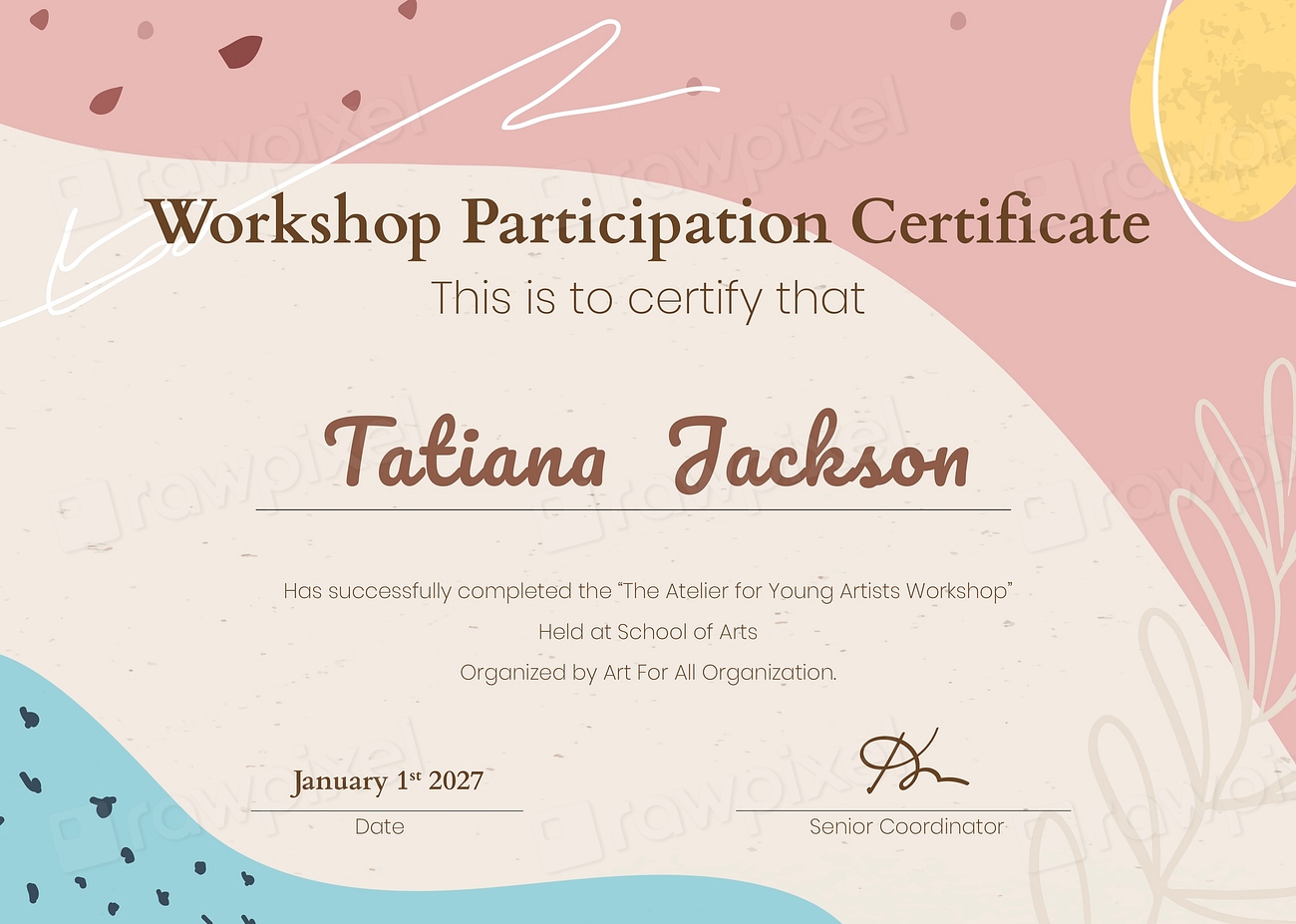
Certificate of Completion
This is the core of the certificate – a formal declaration that the participant has successfully completed the workshop. It’s a tangible symbol of their achievement.

Certificate Details
- Certificate Number: (As mentioned previously)
- Participant Name: (Clearly displayed)
- Workshop Title: (Clearly displayed)
- Date of Completion: (Clearly displayed)
- Instructor Name: (Clearly displayed)
- Company Logo (Optional): (Clearly displayed)
Section 3: Additional Considerations
- Digital vs. Printed Certificates: Consider the benefits and drawbacks of each format. Digital certificates are often more cost-effective and environmentally friendly, while printed certificates offer a more formal and tangible experience.
- Customization: Allow for some level of customization, such as adding a personalized message or a small design element.
- Accessibility: Ensure that the certificate is accessible to all participants, including those with disabilities. Use clear fonts and sufficient contrast.
- Sustainability: Consider using recycled paper and eco-friendly printing methods.
Conclusion: The Power of a Well-Designed Certificate
A thoughtfully designed workshop certificate is an invaluable tool for reinforcing learning, recognizing achievement, and building brand loyalty. By focusing on clear content, visually appealing design, and thoughtful presentation, you can create a certificate that truly represents the value of your training programs. Remember that the certificate is more than just a piece of paper; it’s a symbol of success and a lasting reminder of the knowledge and skills gained. Investing in a professional-quality certificate is an investment in your participants' success and your organization’s reputation. Workshop Certificate Template is a fundamental component of a successful training program.
.png)
0 Response to "Workshop Certificate Template"
Posting Komentar