
Creating a comprehensive and accurate Monthly Health and Safety Report is crucial for maintaining a safe and productive work environment. A well-structured report allows for proactive identification of potential hazards, facilitates effective risk mitigation, and ultimately contributes to a reduction in workplace accidents and injuries. This guide provides a detailed framework for developing and utilizing a robust Monthly Health and Safety Report Template, ensuring consistent and informative reporting across your organization. The core of this template focuses on systematically documenting incidents, hazards, and preventative measures. It's more than just a record; it's a tool for continuous improvement. Understanding the importance of a standardized reporting process is paramount for fostering a culture of safety. This template is designed to be adaptable to various industries and workplace settings, offering a flexible structure that can be tailored to specific needs. Investing in a quality report system is an investment in your employees' well-being and your organization's bottom line. Let's explore how to build a template that truly delivers.
Understanding the Foundation: Why Monthly Health and Safety Reports Matter
The benefits of implementing a consistent Monthly Health and Safety Report Template extend far beyond simply fulfilling regulatory requirements. Effective reporting provides a clear and objective view of workplace safety, enabling data-driven decision-making. It allows for the identification of trends, pinpointing recurring hazards, and prioritizing corrective actions. Furthermore, it demonstrates a commitment to employee safety, fostering a culture of responsibility and accountability. A proactive approach to safety, documented through regular reports, is significantly more effective than reactive responses to incidents. Poorly documented incidents can be difficult to investigate, analyze, and learn from, hindering progress towards a safer workplace. A well-maintained template streamlines this process, providing a clear pathway for identifying, assessing, and resolving potential safety concerns. The consistent application of this template across all departments and teams ensures a holistic view of safety risks, promoting a shared understanding of priorities and responsibilities. Without a standardized approach, safety information can become fragmented and difficult to track, leading to inconsistent practices and potentially overlooked hazards.
Section 1: Incident Reporting – The Core of the Report
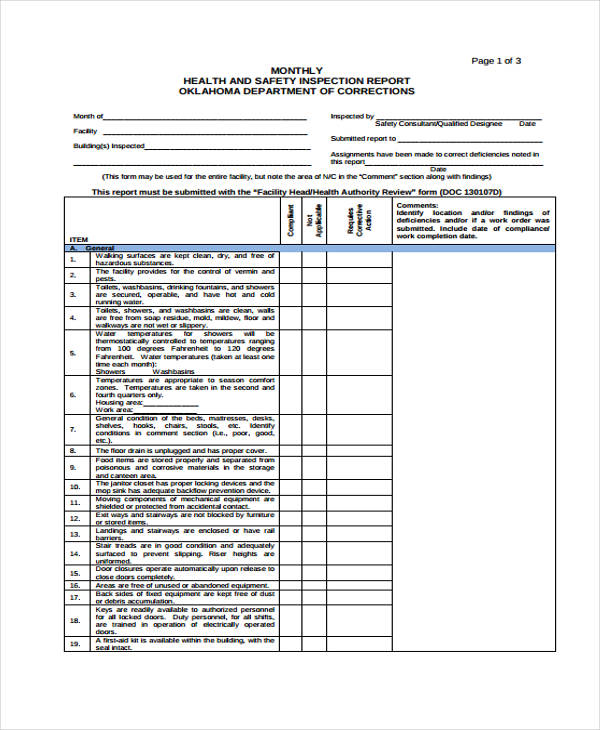
The first and arguably most critical section of the Monthly Health and Safety Report Template is the Incident Reporting section. This section meticulously documents all incidents that occur during the month, regardless of severity. It's vital to capture details accurately and completely to facilitate thorough investigation and analysis. The template encourages a structured approach to incident reporting, prompting the recording of:

- Date and Time of Incident: Precisely record the date and time the incident occurred.
- Location of Incident: Specify the exact location where the incident took place.
- Description of Incident: Provide a clear and concise narrative of what happened. Avoid vague statements; instead, use specific details. For example, instead of saying "Someone tripped," state "John Smith tripped over a loose cable in the break room."
- Injuries Sustained: Document any injuries, including the type of injury, severity, and any immediate medical attention required.
- Contributing Factors: Identify any factors that may have contributed to the incident. This could include equipment malfunction, human error, environmental conditions, or inadequate training.
- Root Cause Analysis (Initial): While a full root cause analysis may be conducted later, the initial section should capture a preliminary assessment of the contributing factors.
This section is designed to be easily accessible and readily available for review by relevant personnel. A simple, intuitive interface is crucial for efficient incident reporting. Consider incorporating a visual aid, such as a checklist, to guide the reporting process and ensure completeness. Regular training on incident reporting procedures is essential to ensure all employees understand their role in documenting incidents correctly.
Section 2: Hazard Identification and Risk Assessment
The second section of the Monthly Health and Safety Report Template focuses on identifying potential hazards within the workplace and assessing the associated risks. This section is a proactive step in preventing accidents and injuries. It involves a systematic review of the work environment and a consideration of potential dangers. Key elements include:
- Hazard Identification: Brainstorming sessions, workplace inspections, and reviewing safety data sheets (SDS) are all valuable tools for identifying hazards. Consider using techniques like "What could go wrong?" to uncover potential risks.
- Risk Assessment: Evaluate the likelihood of each hazard occurring and the severity of the potential consequences. A simple risk matrix (likelihood vs. severity) can be helpful for prioritization. Factors to consider include frequency of use, potential exposure levels, and existing control measures.
- Control Measures: Document existing control measures in place to mitigate identified risks. This could include engineering controls (e.g., machine guards), administrative controls (e.g., safe work procedures), and personal protective equipment (PPE).
- Uncontrolled Hazards: Clearly identify any hazards that cannot be adequately controlled. These should be addressed with immediate corrective action.
The template should encourage a proactive approach to hazard identification, rather than simply reacting to incidents. Regular audits and inspections are vital for identifying new or emerging hazards. Maintaining a log of control measures implemented and their effectiveness is also important.
Section 3: Training and Competency Records
A crucial component of the Monthly Health and Safety Report Template is a section dedicated to training and competency records. This section ensures that employees have received the necessary training and possess the skills and knowledge to perform their jobs safely.
- Training Records: Document all training provided to employees, including the type of training, date of completion, and the trainer.
- Competency Assessments: Assess employee competency in key areas related to safety. This could involve written tests, practical demonstrations, or observation of job performance.
- Refresher Training: Schedule regular refresher training to reinforce safety knowledge and skills.
- Documentation of Training: Maintain a record of all training completed by employees, demonstrating a commitment to ongoing safety development.
Maintaining accurate and up-to-date training records is essential for demonstrating compliance with regulatory requirements and ensuring that employees are adequately prepared for their jobs. This section also highlights any gaps in training or competency, prompting targeted corrective actions.
Section 4: Near Miss Reporting – A Critical Element
Near Miss reporting is a vital component of a robust safety program. It's a system for identifying and documenting potential hazards before they result in an actual incident. Near Miss reports are not about assigning blame; they are about learning from mistakes and preventing future occurrences.
- Definition of a Near Miss: A near miss is an event that could have resulted in an injury or illness, but did not.
- Reporting Procedure: Establish a clear and easy-to-use procedure for reporting near misses.
- Reporting Form: Use a standardized form to capture the details of the near miss, including the date, time, location, description of the event, and potential causes.
- Follow-Up Actions: Ensure that near miss reports are thoroughly investigated and appropriate corrective actions are implemented. This demonstrates a commitment to continuous improvement.
Section 5: Review and Analysis – Continuous Improvement
The final section of the Monthly Health and Safety Report Template is a review and analysis section. This section provides an opportunity to evaluate the effectiveness of the safety program and identify areas for improvement.
- Data Analysis: Analyze incident data, hazard reports, and training records to identify trends and patterns.
- Root Cause Analysis: Conduct a thorough root cause analysis of significant incidents to identify underlying causes.
- Corrective Action Plans: Develop and implement corrective action plans to address identified hazards and prevent future incidents.
- Performance Metrics: Track key performance indicators (KPIs) related to safety, such as incident rates, training completion rates, and hazard reporting rates.
- Feedback and Improvement: Solicit feedback from employees and stakeholders to identify opportunities for improvement.
Conclusion
A well-structured and consistently utilized Monthly Health and Safety Report Template is an indispensable tool for promoting a safe and healthy workplace. By systematically documenting incidents, hazards, and preventative measures, organizations can proactively identify and address potential risks, ultimately reducing the likelihood of accidents and injuries. Remember that this template is a living document – it should be regularly reviewed and updated to reflect changes in the workplace and evolving safety standards. Investing in a robust reporting system is an investment in the well-being of your employees and the long-term success of your organization. Continuous monitoring, analysis, and improvement are key to maintaining a truly safe and productive environment. The consistent application of this template, coupled with a strong safety culture, will yield significant benefits for all stakeholders.
0 Response to "Monthly Health And Safety Report Template"
Posting Komentar