
The Non Conformance Report (NCR) is a critical document within regulatory compliance and risk management. It meticulously documents potential non-conformances, deviations from established procedures, and associated issues, ultimately providing a clear record for auditing and improvement efforts. A well-structured NCR is essential for demonstrating due diligence, identifying weaknesses, and proactively addressing potential problems. This article will delve into the key components of a robust NCR form template, offering practical guidance for creating effective and informative reports. Non Conformance Report Form Template – understanding its nuances is paramount for organizations striving for transparency and accountability. This guide will cover everything from the essential sections to best practices for formatting and content.
Understanding the Purpose of a NCR
The primary purpose of a Non Conformance Report is to identify and report potential issues that arise during the operation of a business. These issues can stem from various sources, including process failures, equipment malfunctions, human error, or even unforeseen circumstances. A properly completed NCR allows organizations to proactively address these problems before they escalate into significant risks. It's not simply a report of what went wrong; it's a detailed analysis of the situation, the root cause, and the proposed corrective actions. Effective NCRs are vital for maintaining compliance with regulations like HIPAA, GDPR, and industry-specific standards. Without a clear and documented record, organizations risk penalties, reputational damage, and legal challenges.

Core Components of a Non Conformance Report
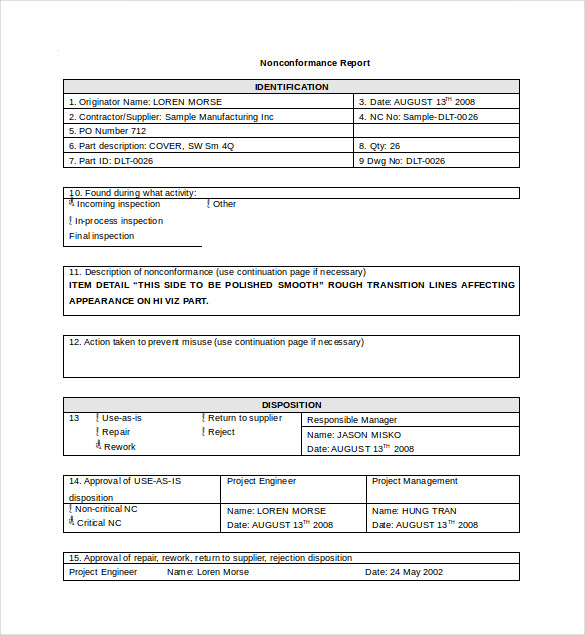
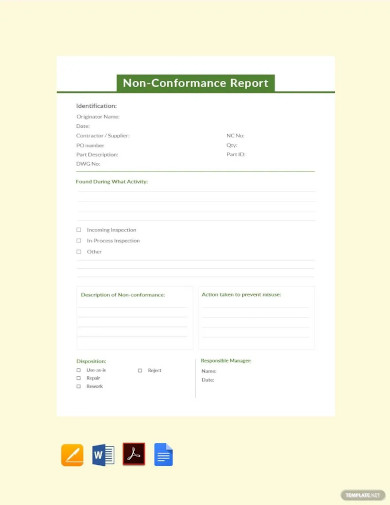
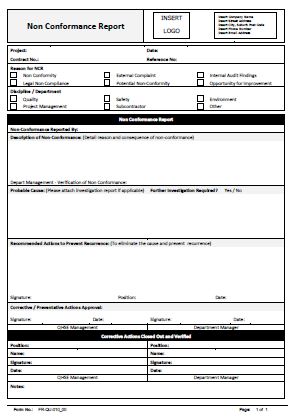
A comprehensive NCR typically includes several key sections. Each section is designed to gather specific information and provide a clear picture of the situation. Here's a breakdown of the essential elements:
1. Executive Summary
The Executive Summary provides a concise overview of the NCR, highlighting the key issues identified and the proposed corrective actions. It's a crucial first impression for stakeholders and should be written in plain language, avoiding technical jargon. This section should clearly state the nature of the non-conformity and the overall impact. A strong Executive Summary sets the stage for the rest of the report.
2. Description of the Non Conformance
This section provides a detailed description of the non-conformance. It should include:
- Date and Time of Occurrence: Precisely record the date and time the non-conformance was identified.
- Location of the Incident: Specify the exact location where the non-conformance occurred.
- Detailed Description of the Issue: Provide a thorough explanation of what happened, including specific steps taken and observations made. Avoid generalizations; stick to the facts.
- Relevant Process or Procedure Involved: Clearly identify the specific process or procedure that was violated.
- Supporting Evidence: Include any supporting documentation, such as photographs, videos, or logs, that illustrate the non-conformance.
3. Root Cause Analysis
This is arguably the most critical section of the NCR. It goes beyond simply describing the issue and delves into why it occurred. A thorough root cause analysis helps identify the underlying factors that contributed to the non-conformance. Common techniques include the "5 Whys" method – repeatedly asking "Why?" to drill down to the fundamental cause. Don't just address the symptom; understand the root cause.

4. Corrective Actions Proposed
This section outlines the specific steps that will be taken to address the non-conformance. These actions should be realistic, achievable, and clearly defined. Examples include:
- Process Modifications: Changes to procedures, work instructions, or equipment.
- Training: Providing additional training to personnel involved.
- Equipment Maintenance: Implementing a preventative maintenance schedule.
- Supplier Audits: Assessing the performance of suppliers.
- Policy Changes: Updating company policies to prevent recurrence.
5. Risk Assessment
A risk assessment component assesses the potential impact of the non-conformance. This includes evaluating the likelihood of the issue occurring and the potential consequences if it does. This assessment helps prioritize corrective actions and allocate resources effectively.
6. Disposition
This section outlines the final disposition of the non-conformance. Options include:
- Corrective Action Completed: The issue has been resolved and the corrective actions are in place.
- Further Investigation Required: Additional investigation is needed to determine the root cause.
- Non-Conformance Continued: The issue will continue to exist unless corrective actions are implemented.
Formatting Best Practices for the NCR
Maintaining a consistent and well-formatted NCR is crucial for readability and ease of understanding. Here are some key formatting guidelines:
- Clear Headings and Subheadings: Use consistent heading styles to organize the information logically.
- Bullet Points and Numbered Lists: Use bullet points and numbered lists to present information concisely.
- Consistent Font and Spacing: Choose a legible font (e.g., Arial, Calibri) and maintain consistent spacing throughout the report.
- White Space: Utilize white space effectively to improve readability.
- Table Formatting: Use tables to present data in a clear and organized manner.
Leveraging Technology for NCR Creation
Several software solutions are available to streamline the creation and management of NCRs. These tools often include features such as:
- Template Library: Access to pre-built NCR templates for various industries and regulatory requirements.
- Workflow Automation: Automated routing and tracking of NCRs.
- Reporting and Analytics: Generate reports to track non-conformances and measure the effectiveness of corrective actions.
- Collaboration Tools: Facilitate collaboration among team members.
Importance of Documentation and Audit Trails
Maintaining thorough documentation is critical for demonstrating compliance and supporting audits. All NCRs should be stored securely and accessible to authorized personnel. Furthermore, a robust audit trail should be maintained to track changes to the NCR and ensure accountability. This is particularly important for industries with stringent regulatory requirements.
Conclusion
The Non Conformance Report Form Template is a vital tool for organizations seeking to proactively manage risks, ensure compliance, and continuously improve their operations. By understanding the core components of a well-structured NCR, and following best practices for formatting and content, organizations can create effective reports that drive positive change and achieve their strategic goals. The consistent application of this template, coupled with a commitment to continuous improvement, is essential for maintaining a robust and resilient business. Ultimately, a proactive approach to NCR management minimizes potential problems and maximizes operational efficiency. Non Conformance Report Form Template – a tool for success.
0 Response to "Non Conformance Report Form Template"
Posting Komentar